





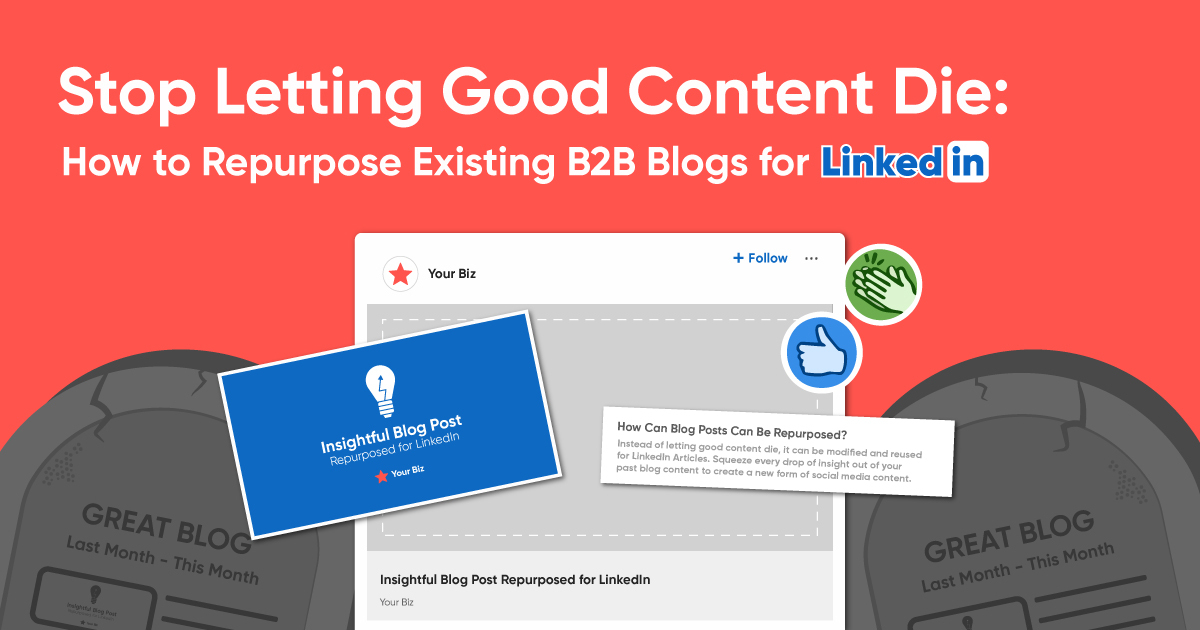
Maximize Blogs You’ve Already Written with a Smart LinkedIn Publishing Strategy
Modern B2B buyers aren’t scrutinizing stale product guides when evaluating potential providers. Quite the opposite, in fact. Today, 75% of B2B buyers are influenced by information they find on social media. And with almost 50% of buyers researching vendors on LinkedIn, B2B brands can leverage this platform to turbocharge sales.
LinkedIn articles for B2B content are a powerful yet often underutilized tool for building trust, boosting credibility, and fostering meaningful connections. And incorporating them into your overall LinkedIn publishing strategy is easier than you might think.
Here, we’ll explore the pros and cons of LinkedIn thought leadership content, along with best practices for transforming existing blogs into high-performing LinkedIn content.
What Are LinkedIn Articles and How Are They Different from Posts?
Before we get into the nitty-gritty of LinkedIn articles, it’s worth taking a moment to understand how they differ from LinkedIn posts.
LinkedIn posts are short, sweet, and perfect for sharing timely information or quick updates. They’re under 3,000 characters and used to spark conversations or real-time interactions.
LinkedIn articles, on the other hand, are long-form, comprehensive content of up to 120,000 characters. Articles create blog-like experiences right on your page, establish thought leadership, and garner meaningful engagement with B2B buyers.
Benefits of LinkedIn Articles for B2B Brands
Using LinkedIn articles has numerous benefits for B2B brands, including:
- Builds Authority: By writing articles that showcase your unique insights and expertise, you increase credibility and position your brand as an authority in your field.
- Amplifies Visibility: LinkedIn articles don’t just appear in feeds. They live on your profile and are indexed by search engines, giving content a longer shelf life and optimizing organic search visibility.
- Deepens Trust: Consistently sharing high-quality content fosters deeper connections with decision-makers and establishes trust. A thoughtfully written article that provides value and actionable advice is always more credible than a generic ad.
- Repurposing: You can easily turn existing content, such as blogs, white papers, or case studies, into LinkedIn content, saving time and energy.
Why Articles Should Supplement, Not Replace Blogs
LinkedIn for B2B marketing is an effective way to attract more buyers. However, it shouldn’t be your only way. Along with their benefits, LinkedIn articles also have drawbacks, including:
- Less Reach: Articles may have lower visibility initially because they don’t automatically appear in the newsfeed. You must create a separate post to share them.
- Limited Engagement: LinkedIn articles often have less immediate engagement than posts because they are longer to digest and less frequently promoted by the algorithm.
- Doesn’t Drive Traffic: Posting articles on LinkedIn doesn’t increase traffic to your website unless you include links.
As such, use LinkedIn articles in tandem with other marketing channels, including blogs, email campaigns, pay-per-click ads, and SEO. You should also use LinkedIn alongside other social media platforms, like Facebook, X, and Instagram, to maximize your digital footprint.
5 Best Practices for Using Articles in Your LinkedIn Publishing Strategy
Ready to get started using LinkedIn articles? Here are five best practices to keep in mind.
Start with Repurposed Content
Repurposing blog content on LinkedIn lets you make the most of what you already have. However, you can’t just copy a blog from your website and plop it onto LinkedIn.
Assess what blogs are worth revisiting. This content is often your most high-performing. After selecting the content, identify the blog’s core themes and condense key takeaways to create a concise, actionable LinkedIn article.
Use Compelling Headlines and Visuals
Huge blocks of text are as ugly as they are difficult to read. Make your articles scannable and visually appealing with compelling headlines and visuals.
Attention-grabbing headlines encourage users to keep reading while visuals make content more digestible.
Videos, infographics, and carousels can transform an otherwise drab article into a stunning masterpiece.
Add Links Strategically
Ultimately, you want to drive more traffic back to your website. Include links strategically and naturally throughout LinkedIn articles. Use text anchors for a more streamlined look.
Never place links in your comment section to avoid algorithm penalties and encourage more engagement with the main article content.
Write for Decision-Makers
B2B buyers are the top dogs on the org chart. They want vendors who deliver the most ROI, efficiency, and solutions for their pain points. Tailor your content accordingly.
Promote with Posts
As we mentioned earlier, LinkedIn articles don’t automatically appear in newsfeeds. Promote your content with short, catchy posts that spark curiosity and encourage readers to keep reading.
When to Choose an Article vs. a Post
So, when should you choose to publish an article rather than share a post?
Here’s a quick guide to help you make the right decision:
- Use posts for quick announcements, updates, event promotions, polls, and links to blogs or LinkedIn articles.
- Choose articles for deep dives, thought-leadership pieces, and formal, informative content.
LinkedIn Articles B2B Content for Maximum Impact
Having a LinkedIn content strategy for business buyers helps to establish trust, increase reach, and position your brand as the B2B vendor of choice. And by repurposing existing content, you can save resources while maximizing impact.
Just remember to use LinkedIn articles at the right time and as a component of a multichannel strategy.
Need help deciding which blogs you should repurpose for your LinkedIn articles? Our marketing experts are happy to help. Reach out to us today to kick your LinkedIn content strategy up a notch.
